When a printable planner makes sense
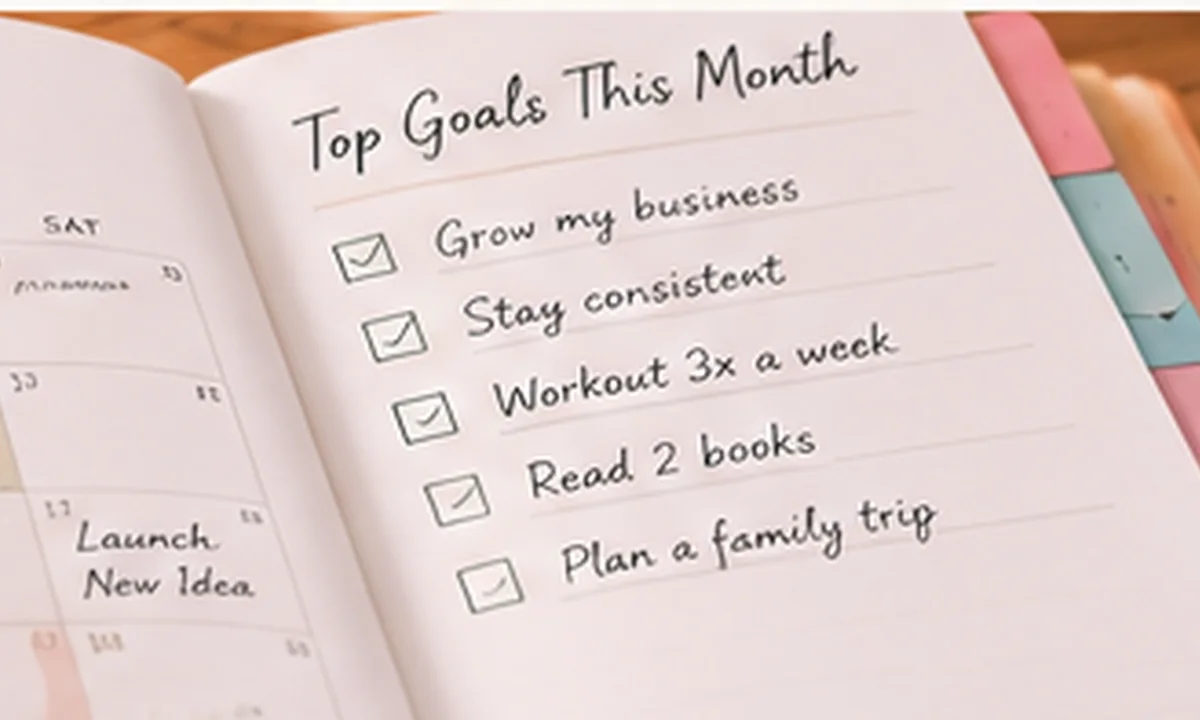
Planners are best when the main question is what needs to happen next. They turn dates, tasks, priorities and milestones into a forward-looking system that can be reviewed before the day, week, project or event begins.
How to decide whether this format fits your routine
Choose a planner when you need to sequence actions, reserve time, prepare for deadlines or break a larger goal into smaller steps. A planner is less useful when your main need is preserving a history of what already happened.
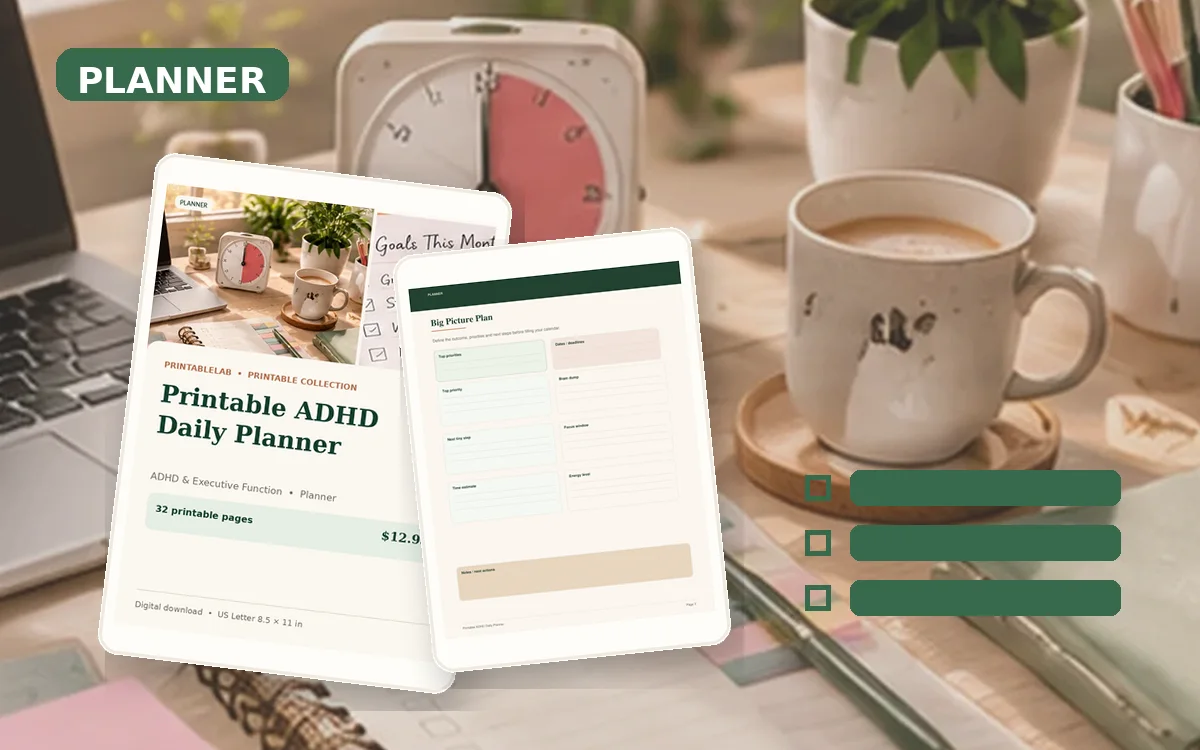
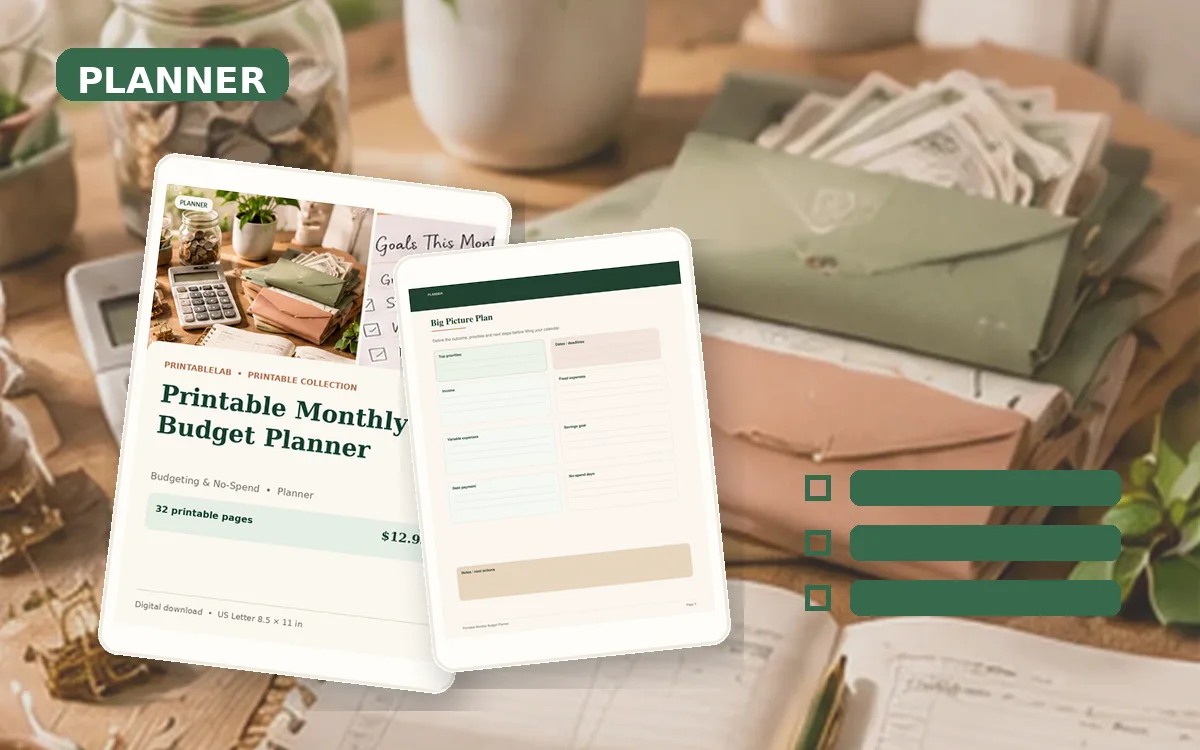
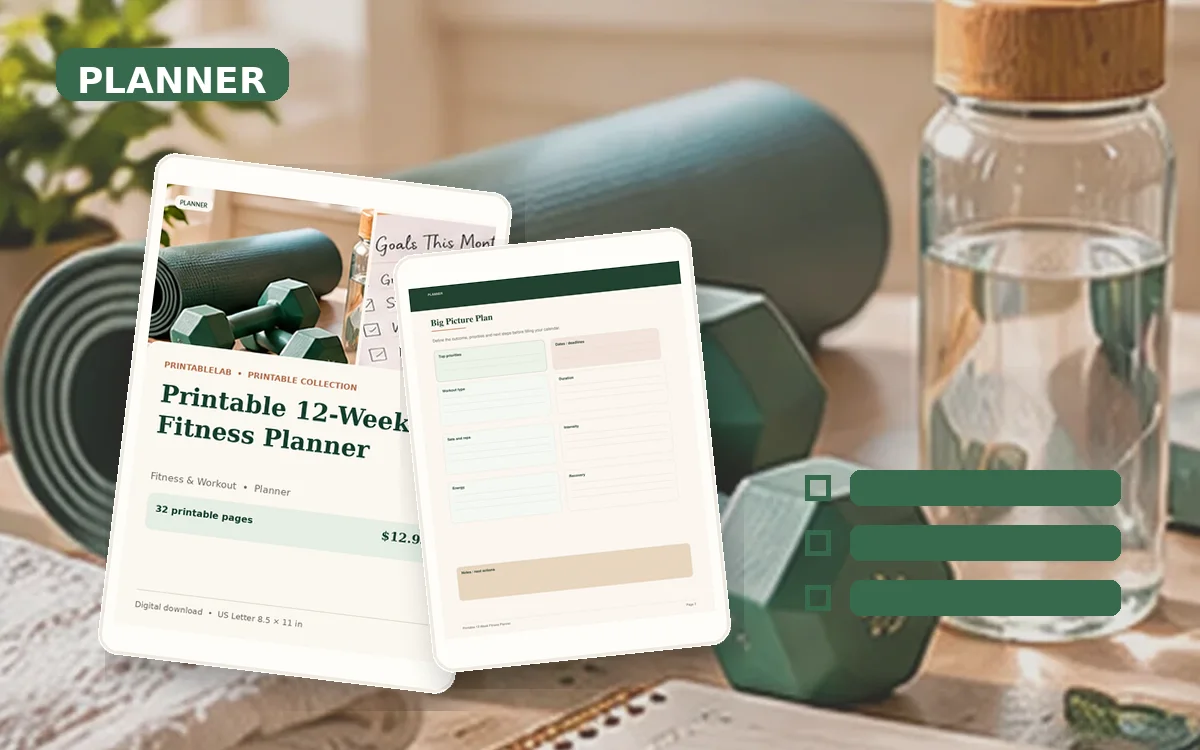
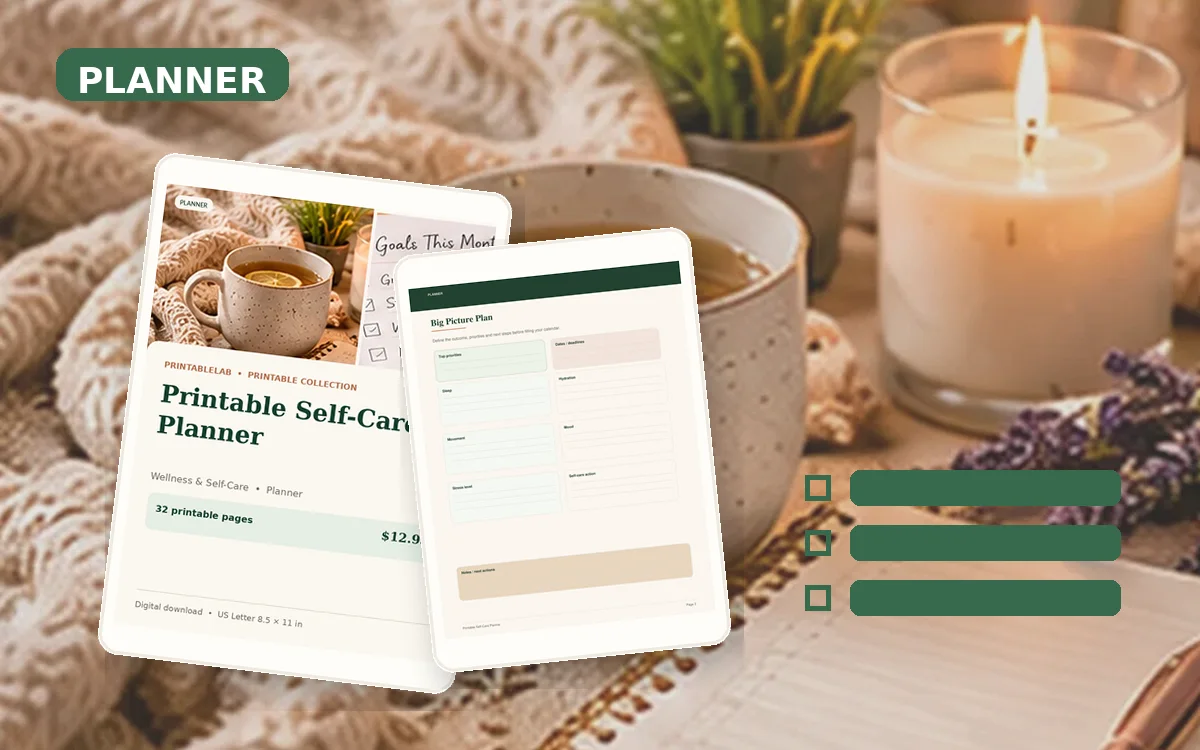
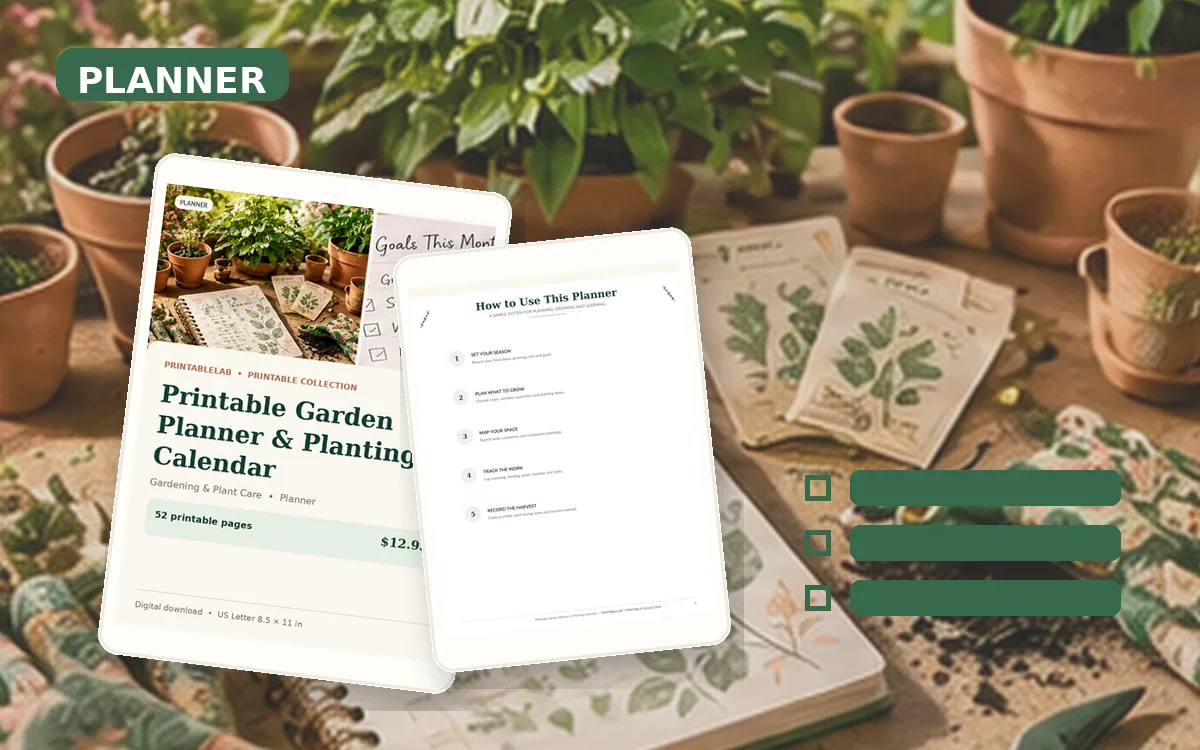
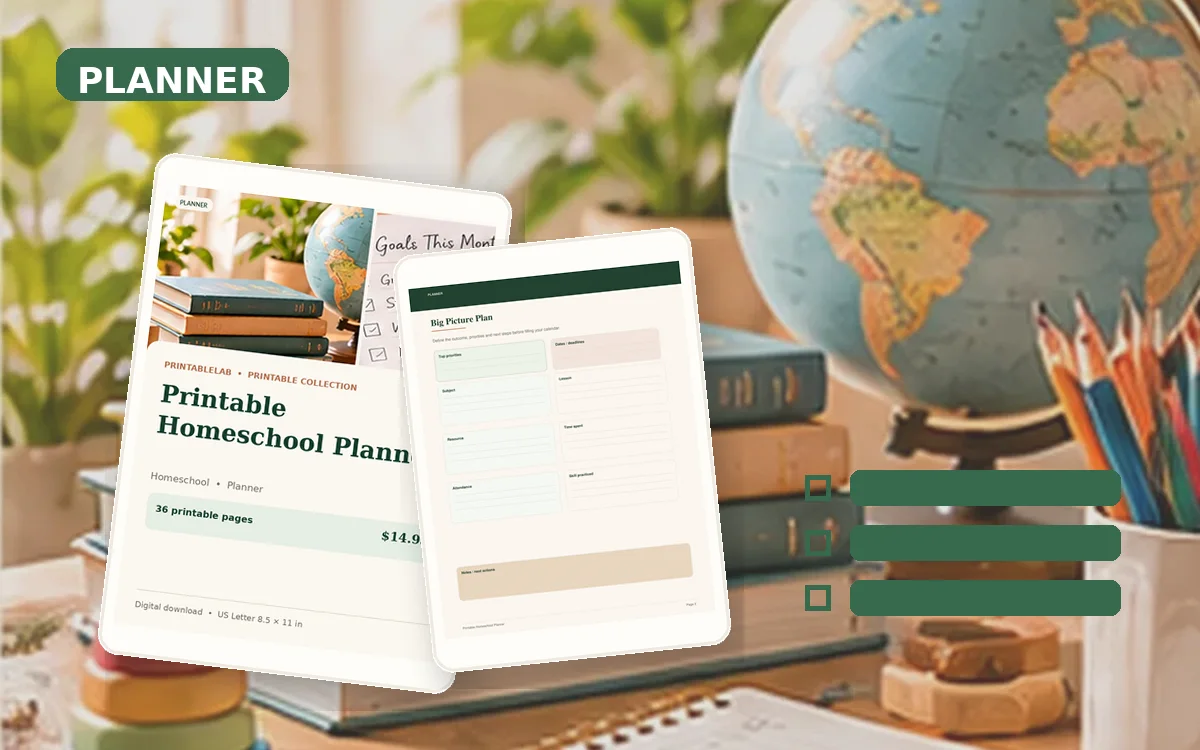
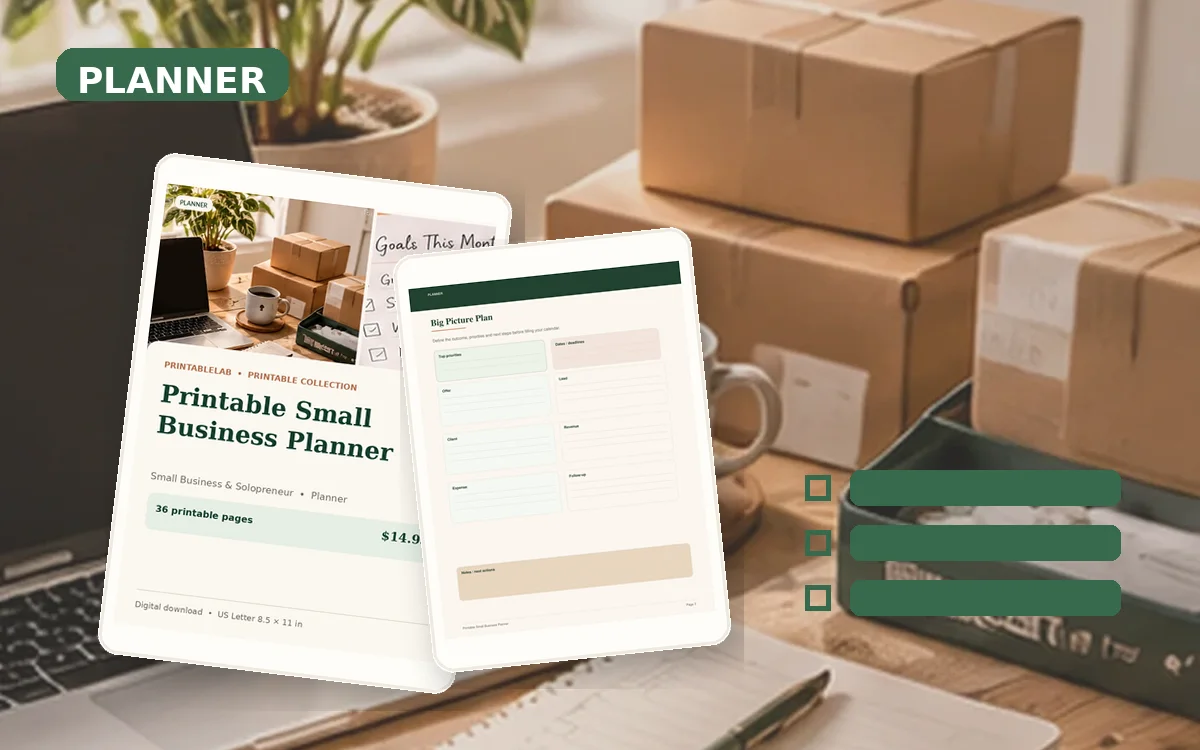
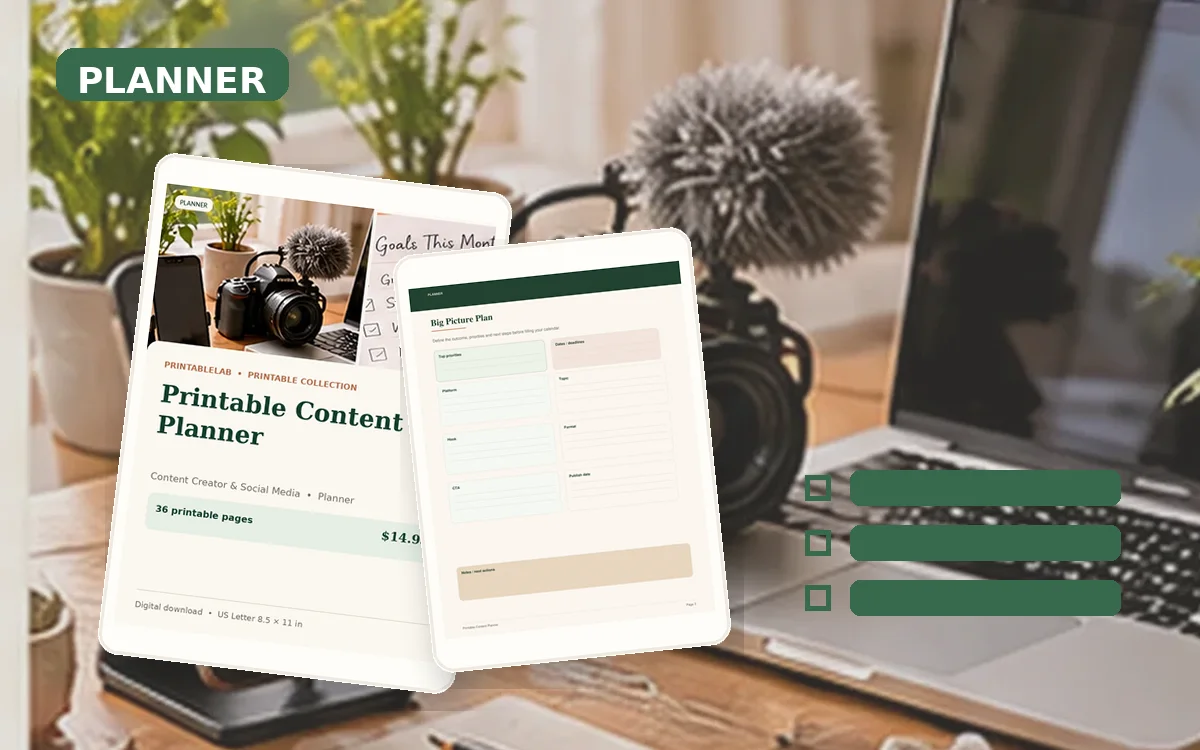
PrintableLab currently has 98 planners across 98 niches. Examples include Printable ADHD Daily Planner, Printable Monthly Budget Planner, Printable 12-Week Fitness Planner, Printable Self-Care Planner, Printable Garden Planner & Planting Calendar. Each product uses the same format for a different subject, so the included pages should be judged by the needs of that niche rather than by the format name alone.
How planners compare with other printable formats
If you mostly want reflection, compare journals. If you need repeated measurements, compare trackers. Logbooks suit dated records, while workbooks are better for guided exercises and decisions.
What makes a planner page useful
A planner page should make a future decision easier. Useful sections usually connect a date or planning period with priorities, tasks, appointments and enough context to act without reopening several other notes. Extra boxes are only helpful when they support that decision. A weekly layout, for example, can show fixed commitments first and then leave room for flexible work around them.
A good planning routine also has a review point. At the end of the day or week, unfinished items should be moved deliberately rather than copied forward forever. That review is where a printable planner becomes more than a to-do list: it helps you decide what still matters, what needs a different deadline and what can be dropped.
Before choosing a planner, look at the subject as well as the layout. A travel planner needs reservations and packing details; a budget planner needs money categories and due dates; a study planner needs assignments, exams and study blocks. The format provides the planning logic, but the niche determines which information deserves space.
You can browse the niche directory when the subject matters more than the format, or compare journals, trackers, logbooks, workbooks when you want a different way to work with the same type of goal.
Guides for printable planners