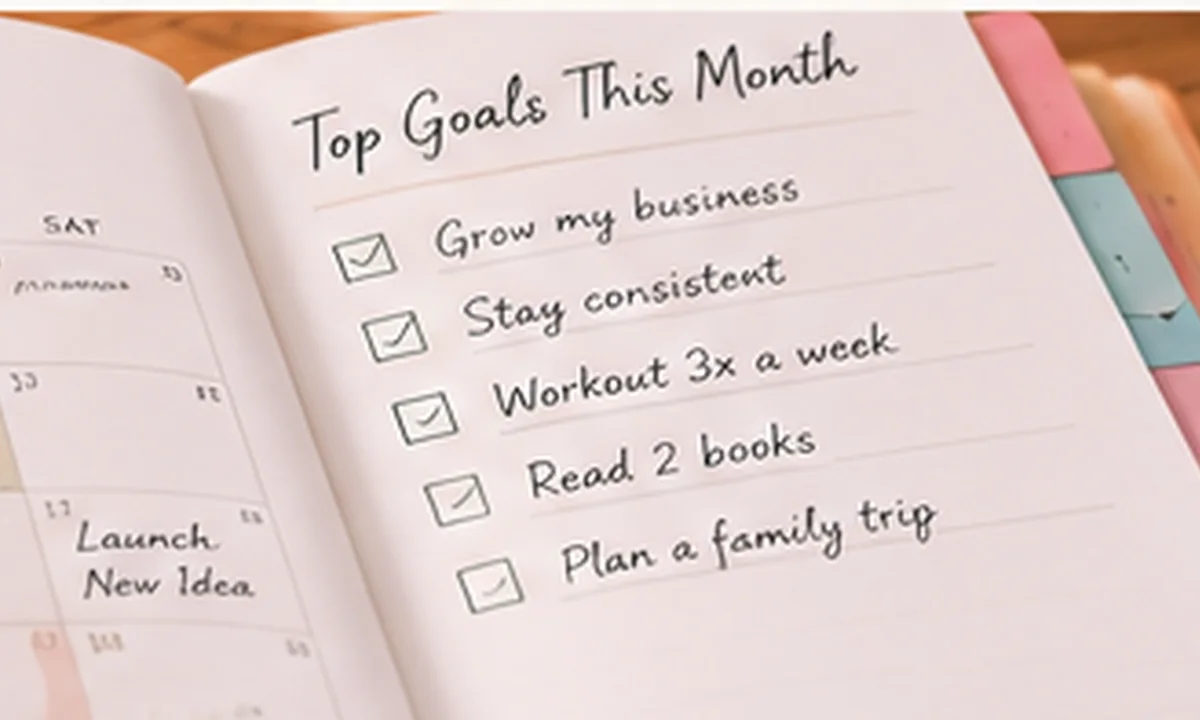
Start with the job you want the planner to do
A printable planner works best when it has a clear purpose. Before printing every page, decide whether you are trying to organize daily tasks, plan a project, manage appointments, build a routine or keep several areas of life in one place. That decision tells you which pages deserve space in your binder and which pages can stay in the file until you need them.
Many people make planning harder by creating a system that is larger than the problem. A better approach is to begin with a small core: one overview page, one planning page and any tracker or notes page that supports the same goal. Add more only when the basic system is already being used.
Print a small test set first
Open the PDF in a standard reader, confirm the page size shown on the product listing and print one test page at 100% or “Actual size.” Check the margins, writing space and hole-punch area before printing the complete set. Ordinary printer paper is usually fine for working pages, while heavier paper can make a cover or dashboard more durable.
Choose a planning rhythm
Your planner does not have to be filled out every morning. Some systems work better with a weekly planning session, followed by short daily check-ins. Monthly planners can be reviewed at the beginning and end of each month. The best schedule is the one that matches how quickly the information changes.
Use repetition to your advantage
Printable pages can be reprinted. If a weekly page works well, print several copies instead of searching for a new layout. If a page is not useful, remove it. A printable planner is flexible because the system can change without replacing the entire planner.
Connect planning with tracking and reflection
Planning tells you what you intend to do. A tracker shows what actually happened, and a journal helps you understand why. If your goal needs all three, browse PrintableLab planners, trackers and journals, or use the niche directory to find coordinated products around one topic.
Build the planner around decisions, not decoration
Before printing extra inserts, identify the decisions you expect the planner to support. A daily page may need appointments and three priorities but not a dozen habit boxes. A project planner may need milestones, dependencies and notes rather than an hourly schedule. When every section earns its place, the planner becomes faster to maintain.
Use a short planning cycle
Set up the next week or next several days, then review what actually changed. Move unfinished work deliberately instead of copying it forward automatically. If the same task moves repeatedly, decide whether it should be broken down, scheduled differently or removed.
Archive completed pages
Keeping old pages can be valuable, but carrying months of finished paper makes an active planner harder to use. Move completed weeks or projects to an archive binder so the current section stays light while still preserving a record you can review later.
Choose the printable format that matches the job
If the topic needs future actions, use a planner. If context and personal observations matter, use a journal. Repeated measurements fit a tracker; dated event history fits a logbook; guided questions and exercises fit a workbook. The Habit Building & Routine Management printable collection lets you compare those approaches without changing the subject you are working on.
Example: turning a crowded week into a usable plan
Imagine a week with two appointments, a bill due, a home task, three work priorities and several small errands. Start by writing the appointments and due date because they are fixed. Next, choose the three work priorities that actually need to move that week. Put errands into one grouped block instead of scattering them across several days. Leave one buffer period open for work that runs late or an unexpected task.
At the end of the week, review what moved and what did not. If the home task was postponed twice, either give it a real time block next week or decide it is not a priority. If an errand repeatedly gets copied forward, group it with the next trip out. The planner is useful because it forces a decision about unfinished work instead of hiding it in an ever-growing list.
If the planner stops getting used
When a planner is abandoned, the problem is often friction rather than motivation. Too many sections, overly detailed daily pages or a planner stored out of sight can make the routine harder than the work it is supposed to organize. Remove unused inserts, move the planner closer to where decisions happen, and simplify the review to a few minutes.
If tasks keep rolling forward, separate true commitments from ideas. A planner should not become permanent storage for everything you might do. Move someday items to a separate list and keep the active page focused on work that has a reason to happen now.
Questions to answer before you settle on a system
- What decisions do I need this planner to make easier?
- Which commitments are fixed and which can move?
- How often will I realistically review the pages?
- Which sections am I tempted to add but unlikely to use?
- Where will the planner stay so I actually see it?
A step-by-step checklist
- Step 1: Choose one planning horizon first: today, this week or this month.
- Step 2: Write fixed commitments before flexible tasks so available time is visible.
- Step 3: Limit daily priorities to the few items that genuinely need attention.
- Step 4: Keep notes or ideas in a separate capture area instead of crowding the schedule.
- Step 5: Review unfinished tasks and decide whether to reschedule, break down or remove them.
- Step 6: Archive completed pages so the active planner stays light and easy to scan.
Use the checklist as a starting point rather than a rulebook. The right routine depends on the subject, how often information changes, and whether the printed pages help you make a decision, remember something important or notice a pattern.
Explore related printables
Continue with the Habit Building & Routine Management printable collection, where you can compare its planner, journal, tracker, logbook, workbook and bundle. You can also return to the Printable Planning Guides for more practical help.