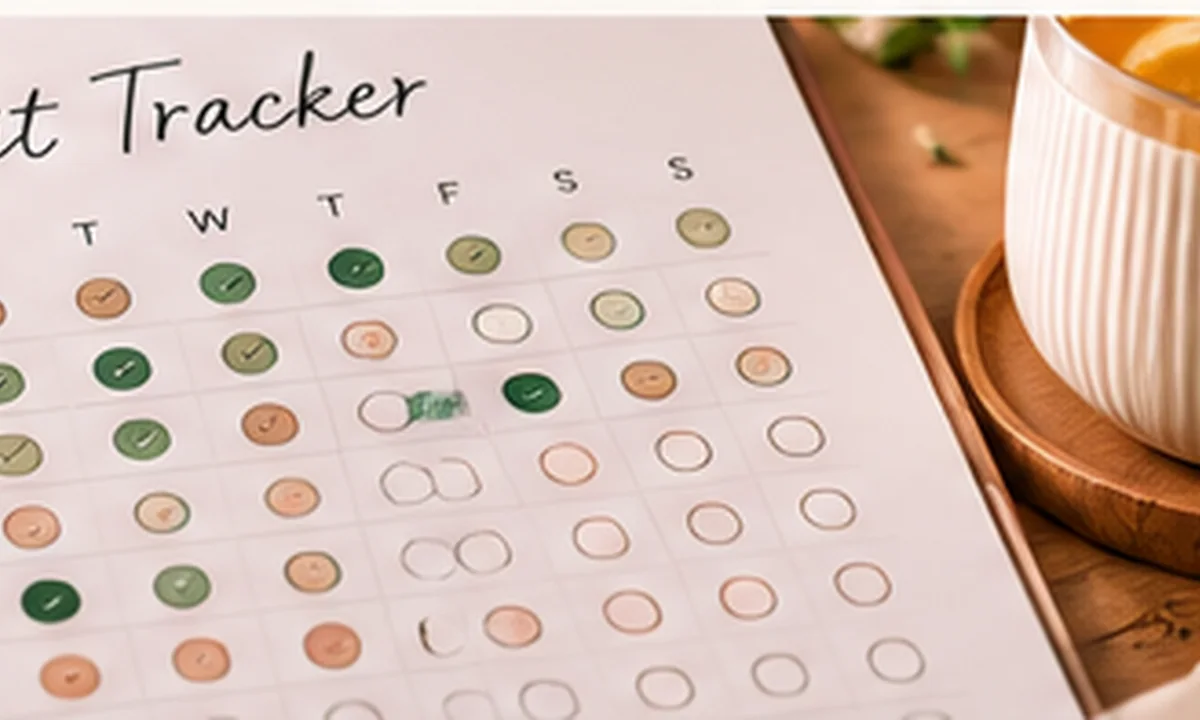
Track fewer habits at first
A habit tracker becomes less useful when it turns into a long list of obligations. Start with one to three behaviors that matter now. Choose habits you can define clearly, such as taking a walk, reading for ten minutes or preparing tomorrow’s priorities.
Define what counts
Decide in advance what earns a check mark. “Exercise” can be vague; “20 minutes of intentional movement” is easier to track consistently. A precise definition prevents you from changing the rule based on how the day went.
Choose a review period
Daily tracking provides detail, but the real value often appears during weekly or monthly review. Look for patterns rather than chasing a perfect streak. A missed day can show that the habit is poorly timed, too difficult or competing with another responsibility.
Keep the tracker visible
Place the page where the behavior happens or where you already review your plans. A tracker hidden in a drawer cannot act as a prompt. If you use a planner binder, place the tracker near the weekly planning pages.
Use the data to adjust the habit
A tracker is not only a scorecard. If completion is consistently low, reduce the size of the habit, change the time or remove an obstacle. If completion is easy, you can gradually increase the challenge.
Find a tracker built for the topic
A generic checkbox grid is enough for simple habits, but specialized goals may need more information. Explore the Habit Building & Routine Management collection or browse all PrintableLab trackers for topic-specific layouts.
Track the behavior you can control
A useful habit tracker records a specific action rather than a vague outcome. “Walk for 20 minutes” is easier to mark consistently than “get fit.” Clear behaviors reduce ambiguity and make missed days easier to understand.
Keep the first tracker deliberately small
Start with one to three habits. Tracking ten new behaviors at once creates a large data-entry routine and makes it difficult to know which change is actually helping. Add another habit only after the current tracking routine feels automatic.
Review patterns, not perfect streaks
A broken streak is information. Look at which days are consistently difficult, what circumstances interfere, and whether the target itself is realistic. Use the record to adjust the environment or schedule instead of treating one missed box as failure.
Choose the printable format that matches the job
If the topic needs future actions, use a planner. If context and personal observations matter, use a journal. Repeated measurements fit a tracker; dated event history fits a logbook; guided questions and exercises fit a workbook. The Habit Building & Routine Management printable collection lets you compare those approaches without changing the subject you are working on.
Example: tracking a new walking habit
Instead of writing “exercise” in a tracker, define the behavior as “walk for at least 20 minutes.” Mark the days it happens and add a short note only when something affected the routine, such as rain, travel or an unusually busy schedule. After two weeks, the page shows whether the habit is realistic under normal conditions.
If the missed days are mostly weekends, the solution may be a different weekend cue rather than more motivation. If almost every day is missed, the 20-minute target may be too ambitious for the current schedule. The tracker becomes useful when the record changes the plan rather than simply displaying a broken streak.
If the tracker becomes discouraging
Rows of empty boxes can make a tracker feel like a scorecard. Reframe the page as evidence. A missed day may reveal an unrealistic target, a weak cue or a schedule conflict. Add a short context note when the pattern needs explanation rather than trying to protect a perfect streak.
If recording the habit takes longer than doing the habit, simplify the tracker. Remove fields you never review, reduce the number of habits and choose a review interval that produces useful information without turning the page into another obligation.
Questions to answer before you settle on a system
- Is the habit defined as a clear behavior?
- How often does the behavior reasonably occur?
- What context would explain a missed entry?
- When will I review the pattern?
- What decision will the tracking data help me make?
A step-by-step checklist
- Step 1: Define the habit as a behavior you can clearly mark complete or incomplete.
- Step 2: Start with one to three habits instead of building a large grid immediately.
- Step 3: Choose a tracking frequency that matches the behavior: daily, weekly or session-based.
- Step 4: Keep the tracker where the behavior happens or where you review the day.
- Step 5: Write a short note when circumstances explain a missed entry or unusual result.
- Step 6: Review patterns weekly and adjust the habit target when the record shows it is unrealistic.
Use the checklist as a starting point rather than a rulebook. The right routine depends on the subject, how often information changes, and whether the printed pages help you make a decision, remember something important or notice a pattern.
Explore related printables
Continue with the Habit Building & Routine Management printable collection, where you can compare its planner, journal, tracker, logbook, workbook and bundle. You can also return to the Printable Planning Guides for more practical help.